
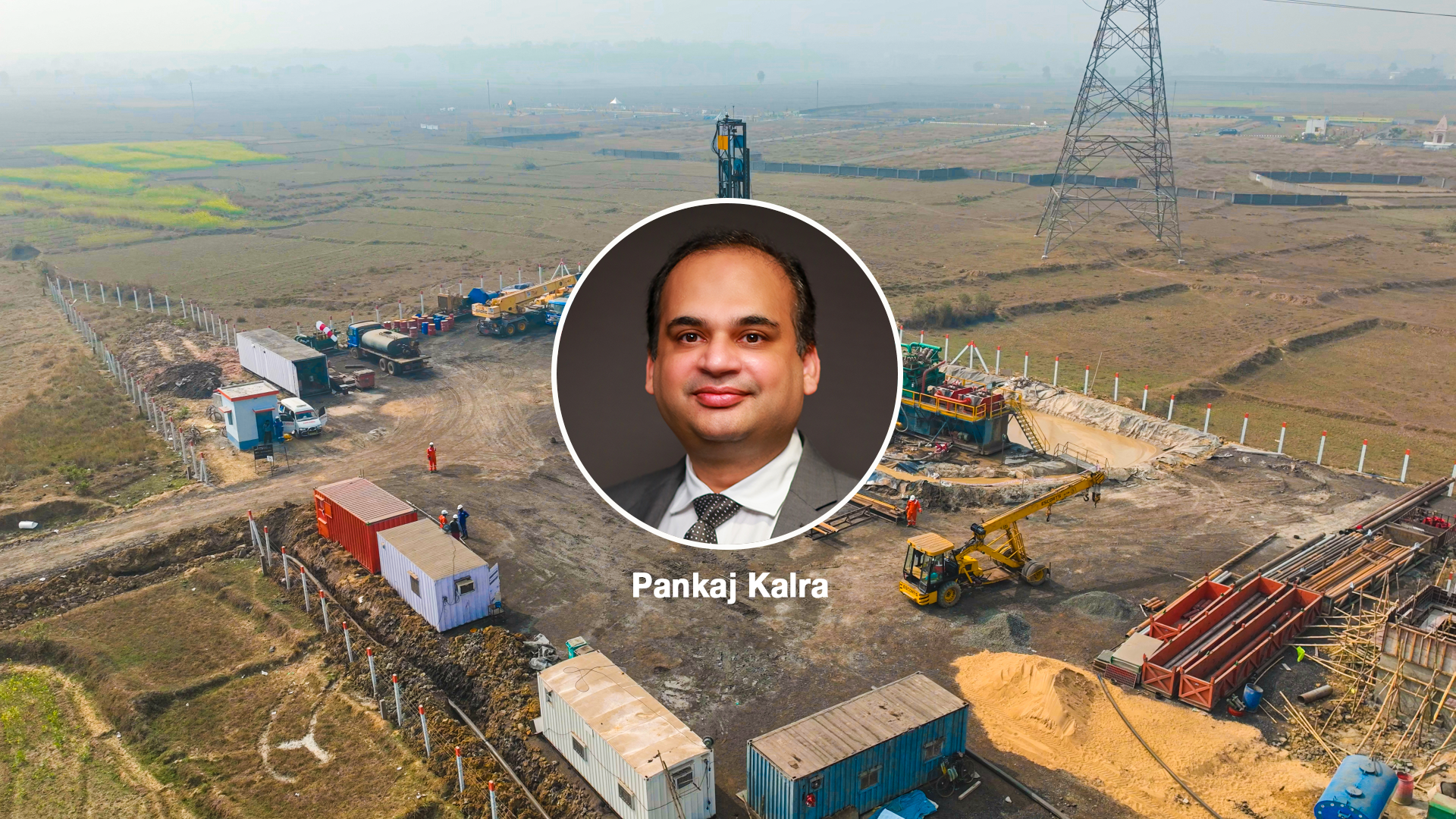
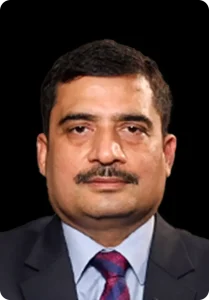
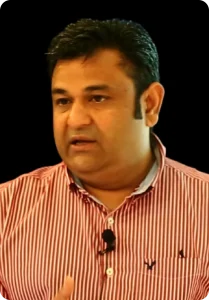
Pankaj Kalra, CEO of Essar Oil and Gas Exploration and Production (EOGEPL), talks to The Energy Year about boosting production at the flagship Raniganj block with horizontal wells and the company’s strategy for growing its portfolio of overseas assets
Essar Oil and Gas Exploration and Production focuses on unconventional oil and gas plays in India.
- Coal seams in the Raniganj East block have excellent permeability characteristics and are ideal candidates for horizontal drilling, which can deliver substantially higher yields than conventional vertical wells.
- Seismic coverage in India has historically been concentrated in the country’s western basins. In recent years, however, companies such as Oil India and ONGC have invested in 3D and 4D seismic surveys to de-risk exploration acreage elsewhere.
- Indian E&P companies are seeing significant opportunities to expand their gas production and reduce the country’s dependence on imported volumes.
Q. What approach are you taking to increase production in the Raniganj East CBM [coal bed methane] block?
Raniganj East is India’s flagship CBM block, and it remains central to our growth. Between 2011 and 2017, we drilled about 350 wells under our first phase of capex, and between 2022 and 2024, we drilled an additional 100 vertical and deviated wells.
After that, we took a purposeful hiatus for one year to recalibrate our strategy and decided to focus on horizontal drilling. Our next wells will go almost 1,300 metres vertically and then about 1,000 metres laterally. Our coal seams are around 8 metres thick and have excellent permeability, making them ideal candidates for horizontal wells.
The production from a horizontal well is typically around five times larger than that of a vertical well due to the significantly larger exposure area. This has been demonstrated globally. Australia, for example, produces about 40.2 bcm (1.42 tcf) of CBM gas per year and has been a pioneer in horizontal wells. We aim to replicate that success in India.
Importantly, we have only developed around 85 square kilometres out of about 500 square kilometres awarded to us. That leaves more than 400 square kilometres to be tapped, so the upside potential is substantial.
Q. How are you addressing the technical challenges of horizontal drilling?
The only hurdle we had to overcome was finding the right technology partners. We are working with established global leaders such as Baker Hughes, SLB and Halliburton, all of whom have had success in Australia and China.
We are not inventing the wheel. The technology is proven and has become run-of-the-mill elsewhere, and our geological formations are no different from those in Australia or other countries. We have already tested our core samples, and the data gives us confidence to go full throttle.
Raniganj has about six major coal seams across the field, and what we want to do is drill vertically to reach a target seam and then move laterally. The advantage of this approach is that it results in extended exposure within the seam. We plan to start the drilling by Q1 2027, and if the results align, it could be a game changer for us.
Q. Have there been any structural changes in India’s oil and gas sector that have helped your growth?
There has been a sea change in government policy over the past seven years. Historically, seismic coverage in India was largely 2D and concentrated on the western side, but more recently, significant investments have been made in 2D, 3D and even 4D seismic by Oil India, ONGC and the government. Better data sets improve the confidence of both domestic and foreign operators.
Infrastructure has also evolved. We were connected to the national gas grid in 2021, so we can supply gas to any part of the country, and a harmonisation of tariffs has further streamlined gas transportation.
India still imports about 50% of its gas requirement. Our objective is to raise production from 1mcm (35.3 mcf) to 5 mcm (176.5 mcf) per day over the next three years. That alone would close about 5% of the gap. Multiple operators increasing production collectively is the only sustainable way to reduce that dependence on imports.
Besides your efforts in Raniganj, what avenues are you pursuing to increase production?
Over the next five years, we aim to turn EOGEPL into a 100,000-boepd business. Our Raniganj asset, where we are looking to develop shale gas along with CBM, will be important in that journey. We expect to complete the pilot programme for shale by Q2 2027, and based on the results, we will go further with the development plan.
Additionally, the government has announced bid rounds for CBM and discovered small fields, and we have identified the blocks we would like to obtain.
Outside India, we are evaluating producing and near-producing assets in Australia, Vietnam, Malaysia, Indonesia and Africa, where we already hold an exploration asset in Nigeria. The key for us is reducing our exposure to pure exploration risk. Growth for us will be a combination of organic development – driven by Raniganj – and carefully chosen asset acquisitions abroad.
Internationally, one of our most important achievements has been in Vietnam, where we co-own Block 114 with Eni, which is the operator. In 2020, the discovery in one prospect was listed as one of the largest discoveries in Southeast Asia, estimated to hold 255 bcm (9 tcf) of gas and about 628 million barrels of condensate. Overall, the block is estimated to hold 538 bcm (19 tcf) of gas and around 2 billion barrels of condensate.
Collectively, Eni and EOGEPL have already invested about USD 300 million in that block. Our next step is to drill one more appraisal well – our fourth in the field – to firm up the development plan.
Source: The Energy Year









 User
User