
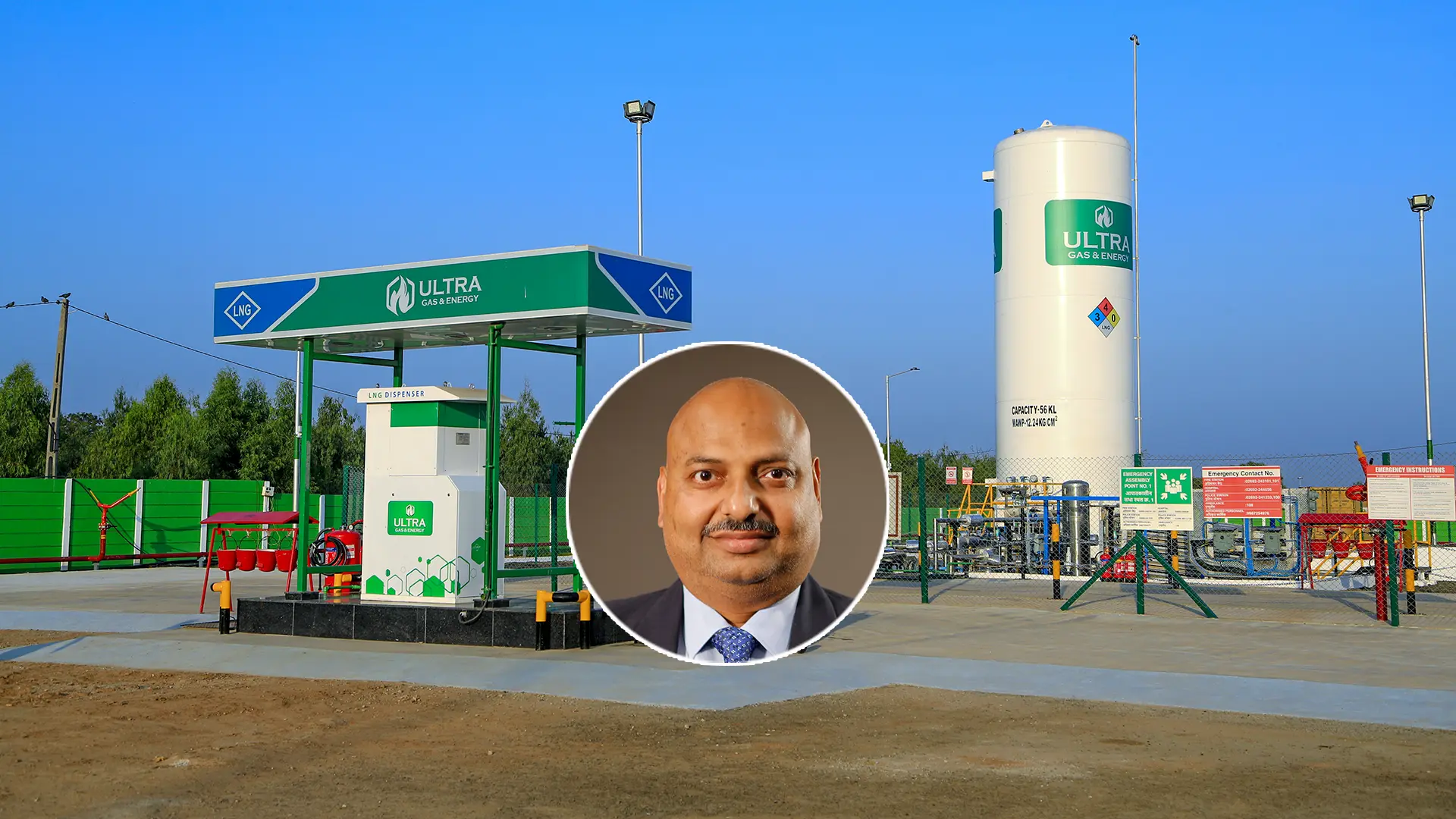
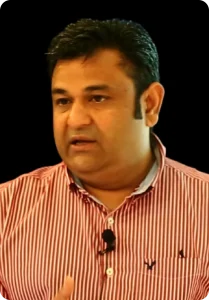
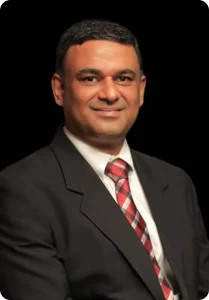
India will need a pragmatic, multi-fuel transition pathway, combining cleaner fuels like LNG, selective electrification, hydrogen pilots, and modal optimisation, to decarbonise freight without undermining logistics competitiveness or supply chain resilience, said Maqsood Shaikh, MD & CEO, Ultra Gas & Energy Ltd., in an interview with Energetica India.
Que: How do you assess India’s current progress in decarbonising heavy-duty freight transport, especially compared to passenger mobility?
Ans: India’s decarbonisation of heavy-duty freight remains at an early stage compared to the rapid transition seen in passenger mobility. Electric adoption in two- and three-wheelers has accelerated rapidly due to strong policy incentives, lower energy requirements, and mature technology. Freight transport, however, presents a different challenge — higher energy intensity, longer duty cycles, higher upfront costs, and the need for dedicated refuelling or charging infrastructure.
That said, 2025 marks an important inflexion point. Policy signals such as the PM e-DRIVE framework for electric trucks, early hydrogen pilots, and tightening fuel-efficiency norms indicate that freight decarbonisation has firmly entered the execution phase. Going forward, India will need a pragmatic, multi-fuel transition pathway — combining cleaner fuels like LNG, efficiency improvements, selective electrification, hydrogen pilots, and modal optimisation — to decarbonise freight without undermining logistics competitiveness or supply chain resilience.
Que: What are the key misconceptions around LNG as a transition fuel, and how does UGEL address them?
Ans: LNG is often misunderstood at both ends of the spectrum — either as a competitor to renewables or as a marginal improvement over conventional fuels. In reality, its role is far more specific and pragmatic. LNG is a transition fuel that enables immediate emissions reduction in segments where electrification is not yet commercially or operationally viable.
Compared to diesel and fuel oil, LNG significantly reduces sulphur oxides, nitrogen oxides, and particulate matter, while also lowering overall carbon intensity. This makes it particularly suitable for long-haul trucking and energy-intensive industrial applications.
At Ultra Gas & Energy (UGEL), our focus has been on converting this theoretical advantage into real adoption. We have built an integrated LNG ecosystem encompassing sourcing, cryogenic logistics, and last-mile dispensing — designed specifically around fleet operators’ needs. This integrated approach reduces operational complexity and improves cost predictability, which are two of the biggest barriers to cleaner fuel adoption.
Equally important, LNG infrastructure is future-compatible. It can seamlessly transition to bio-LNG and other lower-carbon molecules as they scale. Our philosophy has been to build infrastructure that works today while remaining aligned with India’s longer-term decarbonisation trajectory — balancing reliability, affordability, and sustainability.
Que: UGEL has announced plans to set up 100 LNG retail outlets with an investment of INR 900 crore. What will be the key execution challenges in scaling at this pace?
Ans: We have completed the first phase by establishing six operational LNG stations, with a total investment of INR 54 crore, averaging INR 9 crore per station. By March 2026, we plan to have around 15 stations operational, and subsequently scale to nearly 40 stations through the addition of another 15. Thereafter, we have an ambitious target to accelerate to 100 stations, subject to market demand.
Execution is closely tied to demand, particularly the adoption of LNG by the trucking sector. Our parent company, GreenLine, serves as the primary funder, providing a degree of control over the rollout. At the same time, we are depending on third-party demand to support growth, ensuring each station’s commercial viability through business approvals. While the 100-station target is part of our roadmap, its roll-out will ultimately depend on how market demand from LNG trucks evolves.
Que: LNG emits around 30 percent less CO₂ than diesel. Beyond emissions, what are the strongest economic incentives for fleet operators to switch?
Ans: Beyond emissions reduction, the strongest incentive for fleet operators to switch to LNG is operating economics. LNG typically offers a lower cost per kilometre compared to diesel, particularly on long-haul routes with high annual mileage. This translates into meaningful savings over the vehicle lifecycle, helping offset higher upfront vehicle costs.
In addition, LNG engines offer smoother operation, lower noise levels, and reduced engine wear and tear, which can improve maintenance economics and asset life. When combined with structured fuel supply contracts and predictable pricing, LNG enables fleet operators to plan costs more effectively — an important advantage in a sector with thin margins and high volatility.
Que: UGEL stations are designed to be future-ready with EV charging infrastructure. How do you see LNG and EVs coexisting in India’s freight ecosystem?
Ans: UGEL’s stations are designed with the assumption that India’s future freight ecosystem will be multi-fuel, not single-technology. Each LNG retail outlet is EV-ready by design, with dedicated space and electrical provisioning that allows rapid activation of fast-charging or battery-swapping infrastructure as demand emerges.
LNG and EVs address different use cases. LNG is well-suited for long-haul, high-payload operations where energy density and turnaround time are critical. EVs, on the other hand, are increasingly viable for shorter routes and urban or regional distribution. By co-locating both solutions, we offer fleet operators flexibility and a realistic transition pathway rather than forcing premature technology choices.
Que: LNG handling and storage require high safety standards. How does UGEL ensure operational safety across its network?
Ans: Cryogenic fuels such as LNG require a fundamentally different safety mindset due to extreme temperatures, pressure management, and flammable vapours. At Ultra Gas & Energy, safety is treated as a core operational principle, not merely a compliance requirement.
We follow a data-driven safety framework that tracks preventive, incident, and risk indicators across the network. Our facilities are designed and operated in line with globally recognised standards, including HAZOP and HAZID studies, OSHA-aligned process safety systems, and the use of cryogenic-grade materials with multiple safety interlocks. Real-time gas monitoring, leak detection, predictive maintenance, and regular emergency response drills — often conducted with external agencies — are integral to our operations.
Que: How does UGEL align with Essar’s broader clean energy and infrastructure vision?
Ans: UGEL is closely aligned with Essar Group’s broader clean energy and infrastructure strategy, which focuses on building scalable solutions for hard-to-abate sectors. Our INR 900 crore investment in a nationwide LNG retail network supports the transition of long-haul logistics away from diesel toward cleaner fuels.
This effort sits within a larger, integrated ecosystem that includes Blue Energy Motors, which develops LNG and electric trucks, and GreenLine Mobility Solutions, which operates these vehicles. Together, this coordinated approach addresses fuel availability, vehicle technology, and fleet operations, creating an end-to-end pathway for decarbonising India’s freight transport value chain.
Source: energetica-india





























 User
User