
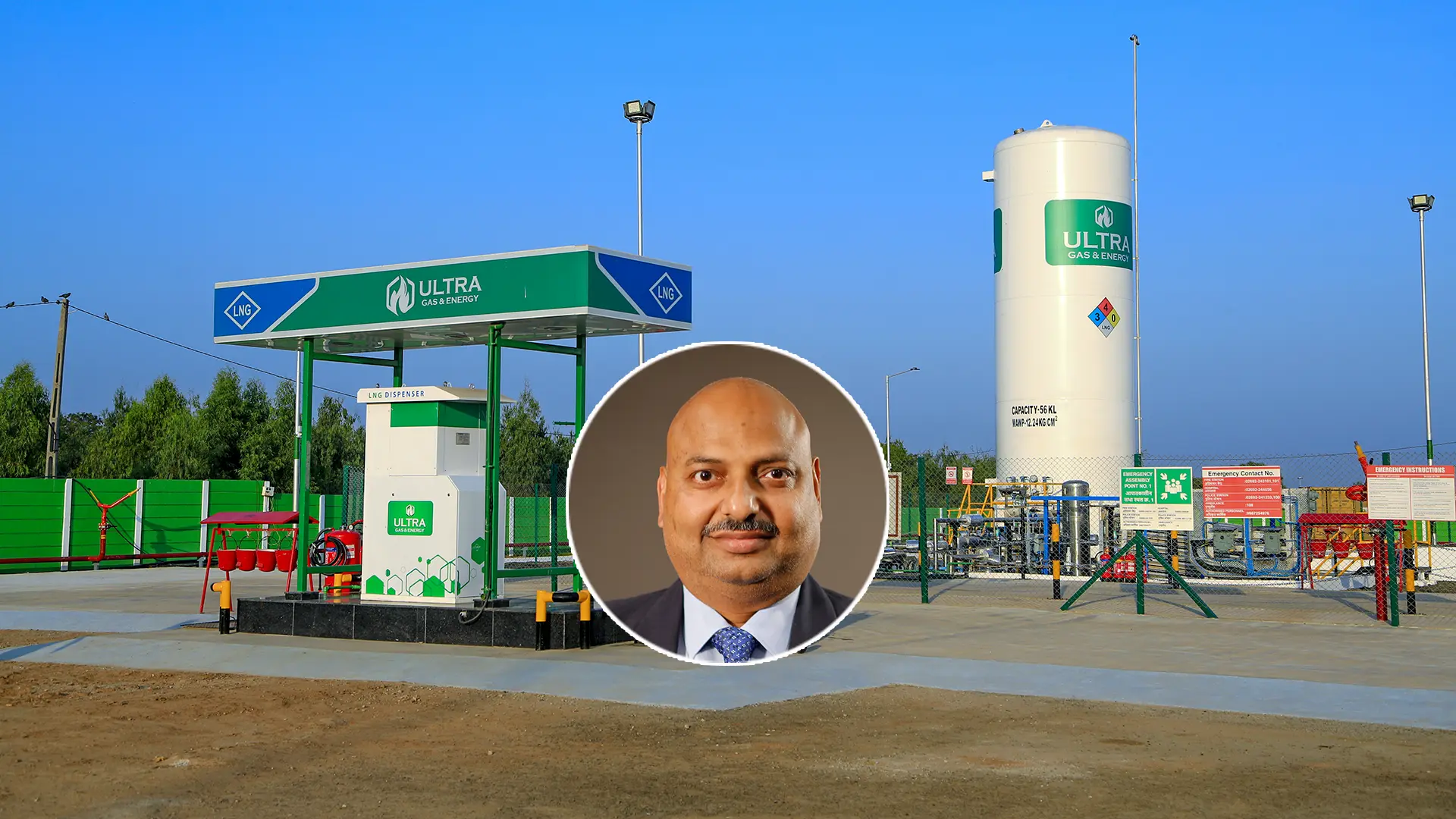
An article authored by Maqsood Shaikh, MD & CEO, Ultra Gas & Energy Ltd.
India’s transition toward cleaner transport must address one of the most challenging segments of mobility: heavy-duty, long-haul freight. While electrification is rapidly transforming passenger vehicles and urban mobility, decarbonising freight requires a more nuanced approach. For a country of India’s geographic scale and logistical complexity, the path forward lies not in a single technological bet but in a pragmatic multi-fuel strategy. India needs to make its heavy-duty, long-haul trucks cleaner in order to slash its road transport emissions and, in turn, pave the way for the country to achieve its climate goals.
Long-haul trucks are the single largest contributor to emissions within India’s road transport sector. They account for barely three percent of vehicles on the road yet generate more than a third of the sector’s greenhouse gas emissions. That imbalance makes heavy-duty trucking an obvious and urgent target if India is to honour its commitment to achieve net zero by 2070.
At first glance, replacing diesel fleets with battery-electric trucks may appear to be the most direct route to decarbonisation. However, the freight ecosystem operates under constraints very different from passenger mobility. Long-distance trucking is energy-intensive, time-sensitive, and deeply integrated into the country’s economic supply chains. Solutions that work well in urban mobility cannot always be directly replicated in long-haul freight. That’s because the challenges for freight transport are unique. Shipping goods across the vast expanse of our country is highly energy-intensive, for one. Trucks also run longer duty cycles. Efficient movement of goods, meanwhile, demands minimal downtime, requiring an expansive network of refuelling and charging stations to keep them on the road.
In this context, a sudden straight-to-zero approach would thus disrupt the very supply chains that are the lifeline of India’s logistics that underpin India’s economic growth.
Heavy-duty, long-haul trucks after all form the backbone of the country’s logistics system. They move close to three quarters of India’s freight, connecting ports to factories, farms to markets, and industrial clusters to consumers. Any disruption to this segment would ripple across the broader economy. The transition to cleaner mobility, therefore, must be calibrated rather than rushed. It must be gradual, pragmatic and commercially viable.
It should put the sector firmly on a downward emissions trajectory while buying time to build charging infrastructure, scale renewable power generation, strengthen grid capacity, and develop hydrogen and battery supply chains. As opposed to a one-size-fits-all approach, it needs a portfolio of solutions tailored to distinct operating profiles, combining clean fuels like Liquefied Natural Gas (LNG) with efficiency improvements, selective electrification, hydrogen pilots, and modal optimisation.
In this way, the country can decarbonise freight without undermining logistics competitiveness or supply chain resilience.
LNG for instance, offers an immediate and scalable alternative for long-haul operations. It allows immediate displacement of diesel in long-haul applications, reducing carbon emissions by around 30 percent while also lowering particulate and nitrogen oxide emissions. At the same time, it retains diesel-like range, refuelling time and payload capacity, which is crucial to fleet operators.
Battery electric trucks, on the other hand, are ideally suited to short-haul urban logistics, where predictable routes and depot-based charging make electrification more practical. Over time, green hydrogen and other emerging fuels will add further depth to this mix.
Decarbonising India’s freight sector cannot be reduced to a binary choice between diesel and electricity. It is a challenge that demands technological diversity. A multi-fuel approach in this context offers the most realistic path forward. It protects supply chain continuity, accelerates emissions reduction, and builds the foundations for a zero-emission future.
Ultimately, India must balance two critical national priorities: sustaining economic growth and achieving meaningful climate progress. The country’s growth story depends on the seamless movement of goods across its vast geography. At the same time, its climate commitments demand a steady transition toward cleaner forms of transport.
The way forward is therefore not technological absolutism but strategic pragmatism. By embracing a portfolio of cleaner fuels and phasing the transition intelligently, India can decarbonise its freight sector while protecting the efficiency and resilience of the logistics networks that power its economy.
Source: ET Edge Insights














































 User
User