
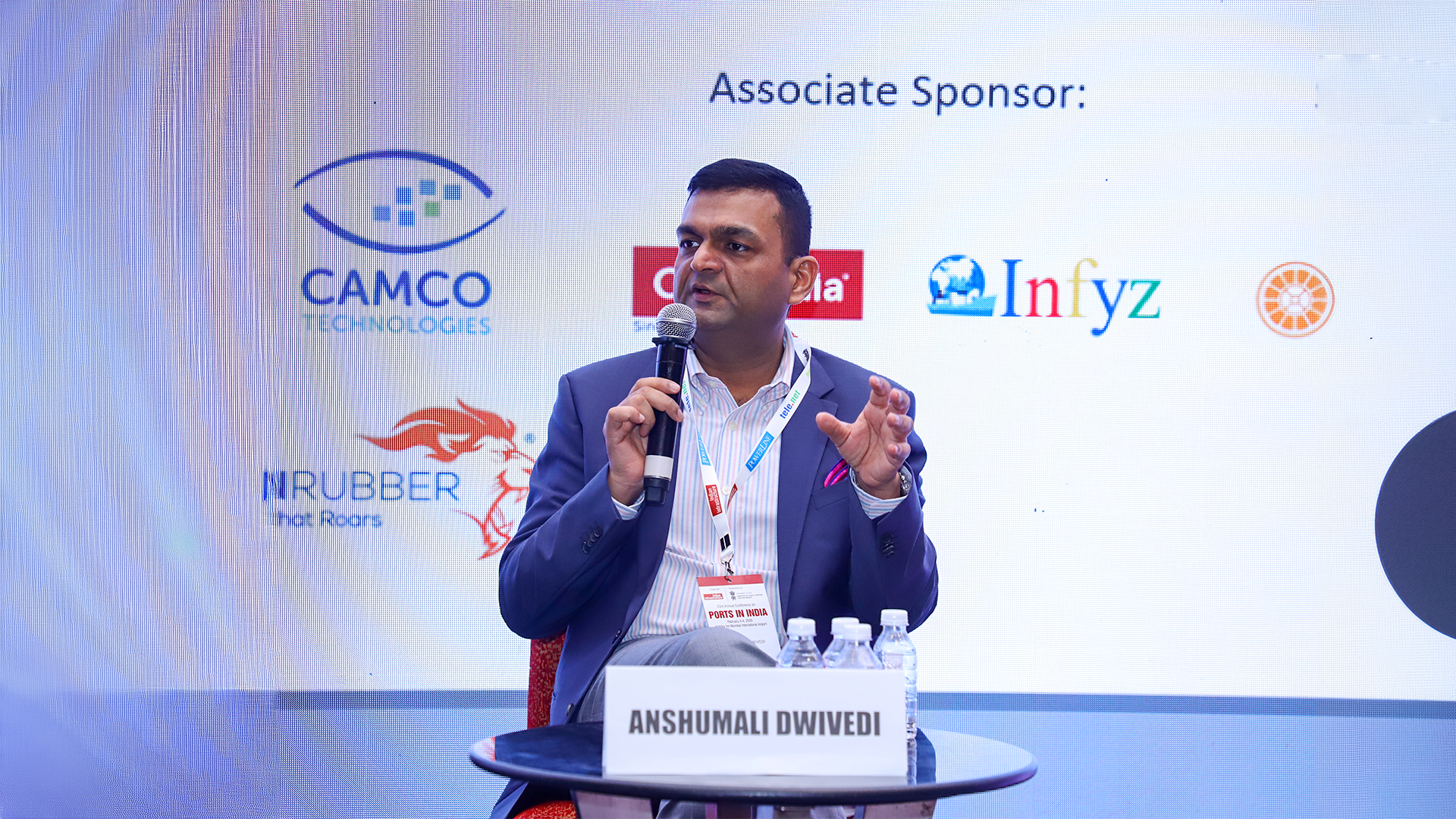
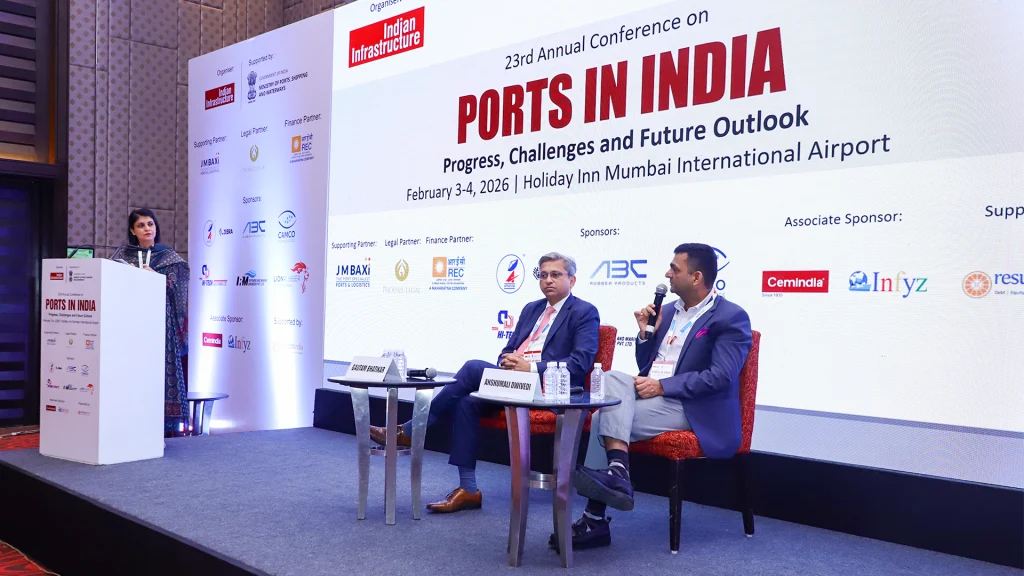
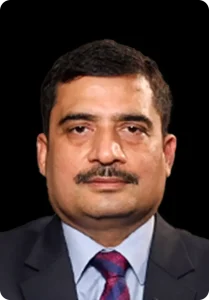
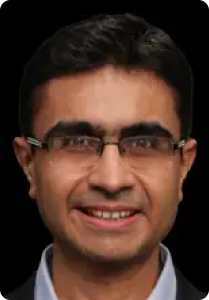
Essar Ports participated in India Infrastructure’s 23rd Annual Conference on “Ports in India” held on 3rd February in Mumbai, contributing to a high-level session on “Progress, Challenges, and Future Outlook.” Representing the company, Mr. Anshumali Dwivedi, CFO & Head of Strategy, Essar Ports, joined Mr. Gautam Bhatikar, Partner, Phoenix Legal, to share perspectives on the evolving regulatory, financial, and operational dynamics shaping India’s port ecosystem.
Mr. Dwivedi highlighted the glorious track record of Essar Ports in having established world-class assets on the both, East coast and west coast of India. Essar Ports have been pioneers in attracting FDI in Ports sector in India and our aim is to bring Essar Ports back to scale and target 5% of India’s Port capacity. He also highlighted the transformative impact of regulatory reforms, particularly the removal of the TAMP regime and the transition of major port trusts into Major Port Authorities. These measures, he noted, have introduced greater pricing flexibility and operational autonomy, strengthening competitiveness across the sector. However, he highlighted aggressive and, at times, unsustainable bidding in multi-stage concession processes can undermine project viability, delay financial closure and strain industry resources.
On operational strategy, Mr. Dwivedi emphasised that the ports of the future must be both smart and sustainable. Automation, mechanisation, and digital integration are not merely efficiency tools, they are fundamental drivers of profitability in a capital-intensive industry. Enhanced safety, lower operating costs and improved asset utilisation directly strengthen EBITDA performance, which in turn underpins debt servicing capability and investor confidence. Essar Ports’ own initiatives, including fully mechanised, covered conveyor-based coal terminals, advanced automated liquid terminals and EV-led logistics solutions, demonstrate how environmental responsibility and operating performance can advance together.
Commenting on the Union Budget, Mr. Dwivedi noted the continued policy thrust on inland waterways, shipbuilding, and coastal shipping is encouraging. These initiatives are vital to expanding cargo movement, improving multimodal connectivity, and building a resilient, sustainable maritime ecosystem. The industry will now look forward to timely implementation that can unlock long-term capital and accelerate sectoral growth.
The session reinforced a clear theme: India’s port sector is entering a new phase, one defined by regulatory maturity, technological advancement, and sustainability-led competitiveness. Through active engagement in such forums, Essar Ports continues to contribute to shaping a smarter, more efficient, and future-ready maritime landscape.















 User
User