
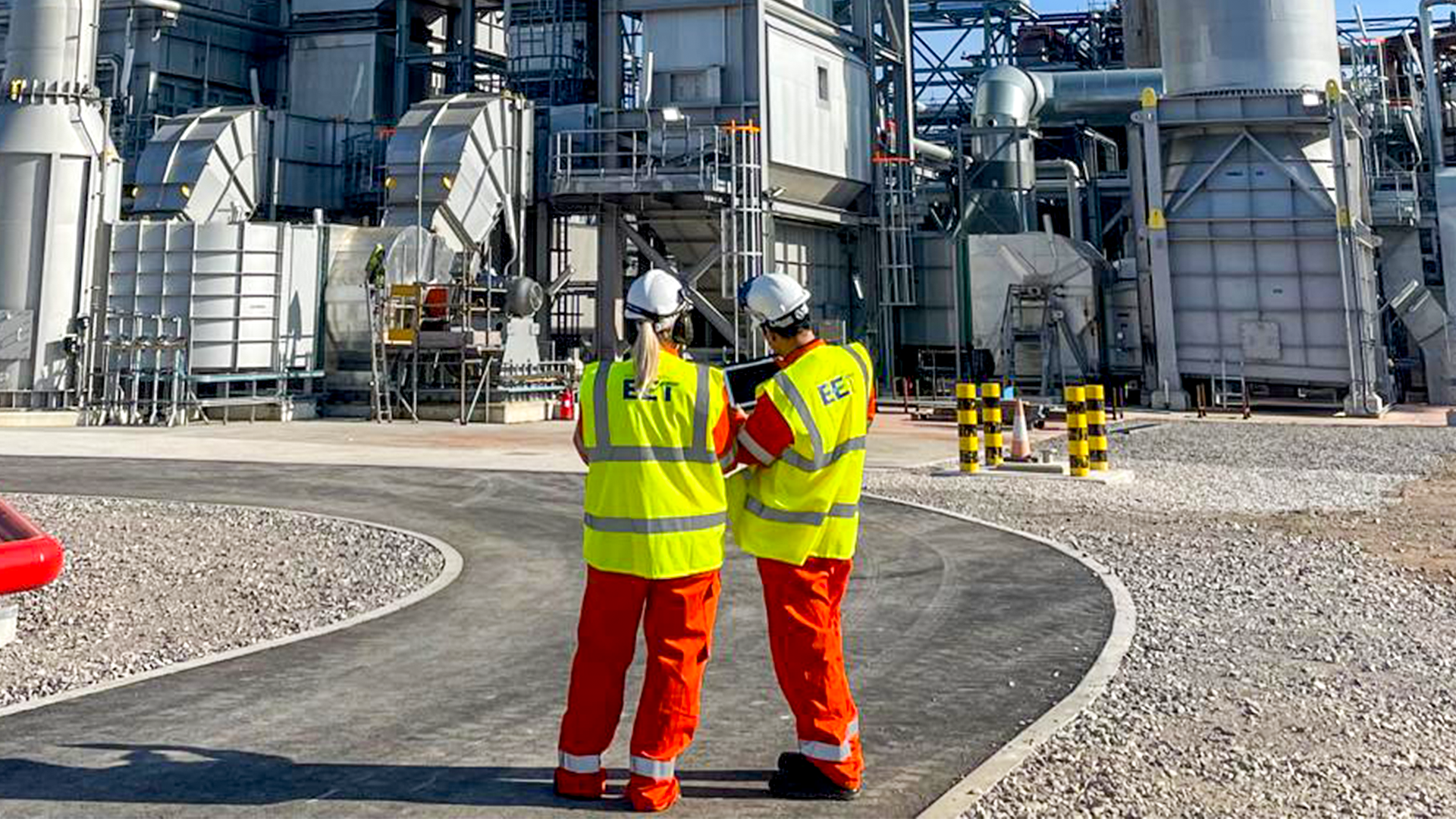
New Statesman published an article by Ruth Herbert, Chief Business Development Officer and Managing Director at Essar Energy Transition, on how the UK’s low-carbon refining sector is driving energy security, innovation, and industrial resilience — and why it matters.
Read the full article below.
The UK refining sector is not just an economic pillar, it is a strategic asset underpinning energy security, industrial resilience and the transition to a low-carbon future.
For the UK government’s industrial strategy to be credible, the inclusion of a sustainable domestic refining base is essential. Without it, the UK risks hollowing out its industrial heartlands, undermining energy independence and forfeiting leadership in clean-energy innovation. With the right government policies, this sector can thrive, delivering high-value jobs, cutting-edge technologies and a robust supply chain for the nation’s fuel and energy needs.
But the challenges are stark. Rising energy and carbon costs in Europe, combined with uneven global competition where overseas refiners face no equivalent carbon pricing, threaten the viability of UK operations. The recent closure of Grangemouth in Scotland and financial pressures at Prax Lindsey in Lincolnshire are warning signals. These are not signs of inevitable decline; they are calls for urgent, joined-up policy action.
The UK’s four major refineries – Fawley, Pembroke, Humber, and Stanlow in Cheshire – produce more than a million barrels of fuel daily, powering transport and logistics across land, sea and air. Economically, refineries are lifelines for industrial regions, providing fuel and chemical feedstocks for manufacturers. They sustain thousands of highly skilled,
high-value, trade union-recognised jobs in areas like the north-west, supporting local supply chains, engineering and logistics. These are not just jobs: they are careers that anchor communities and drive regional growth.
Stanlow is a cornerstone of the north-west industrial base, and domestic refining capacity shields the UK from global supply shocks, as seen during the 2022 Ukraine crisis, which triggered fuel price spikes across Europe. Without a strong refining sector, the UK would be exposed to price volatility and geopolitical risk, undermining everything from daily commutes to military readiness.
Far from being sunset industries, UK refineries are hubs of innovation. Leveraging existing infrastructure and skills, they can accelerate the shift to low-carbon energy. Stanlow is leading this transformation. In April 2025, Europe’s first hydrogen-ready furnace was commissioned, expected to cut 200,000 tonnes of CO2 emissions annually from 2029 when powered by low-carbon hydrogen from the low-carbon hydrogen production plant being developed at the site. Alongside the hydrogen-ready combined heat and power plant also being developed at the site, the facility will supply low-carbon hydrogen, power and heat to Stanlow and neighbouring industries, creating a blueprint for industrial decarbonisation.
Advanced sustainable aviation fuels for airports such as Manchester and Liverpool are also being developed, supporting the decarbonisation of air travel.
These projects will attract investment, create export opportunities and secure long-term jobs for local communities. They demonstrate that the refining sector is not about survival; it is about leadership in the energy transition.
While laying the groundwork for major energy transition investments, the sector continues to make incremental reductions in energy use and carbon emission reductions.
However, ongoing investment in UK refineries and energy transition ambitions depend on enabling policy. For example, the inclusion of refined products in the UK’s planned Carbon Border Adjustment Mechanism (CBAM) is critical to ensure domestic refiners can compete fairly.
Unlike foreign competitors, UK refineries face carbon costs under the UK Emissions Trading Scheme (ETS), currently around £50-£60 per tonne of CO2 and rising. This creates an uneven playing field, allowing cheap, highercarbon imports from countries that also have lower environmental standards to undercut UK fuels – even though UK fuels have a lower carbon footprint. Importing higher-carbon fuels while penalising domestic lower-carbon production undermines the UK’s climate goals, exporting valued north-west jobs while importing emissions.
Without a CBAM for refined products, the UK risks becoming dependent on imports, exposing itself to supply shocks and eroding the industrial base that supports the energy transition. Given the recently announced tapering down of free emissions allowances for UK refineries in the next ETS period, it is imperative that the UK CBAM is extended to include refined products from 2028, to avoid further tipping the playing field towards imports.
To bridge the gap until CBAM implementation, interim relief from rising ETS costs is essential, alongside rapid delivery of decarbonisation infrastructure including support for low-carbon hydrogen production and carbon capture. Government must also prioritise planning and permitting reforms to accelerate these projects, ensuring the north-west remains at the forefront of industrial decarbonisation.
The refining sector is a dynamic asset, powering our economy, securing energy and driving innovation for a low-carbon future. Recent challenges are opportunities to strengthen a sector that is vital in every sense. A UK CBAM, paired with policies supporting investment in decarbonisation infrastructure, can unlock this potential, ensuring refineries like Stanlow lead the transition to sustainable fuels and energy.
The choice is clear: invest in a thriving, low-carbon refining sector that protects and creates jobs, strengthens communities and powers the UK forward.
For the north-west, this means securing its position as the industrial engine of the energy transition. For the UK, it means delivering an industrial strategy that is credible, competitive and future-proof.
Source: New Statesman















































 User
User